Why Sleeping in Total Darkness May Be the Most Underrated Anti-Aging Habit You Have

The Habit Nobody Talks About - But Should
You track your steps. You take your supplements. You drink the water. But there is one nightly habit that quietly outperforms most wellness routines - and it costs absolutely nothing.
Sleeping in total darkness.
Not dim light. Not a TV on low. Total. Darkness.
Here is the truth: the light environment in your bedroom while you sleep may be doing more damage to your long-term health than a bad diet day ever could.
What Light Does to Your Body While You Sleep
Your body runs on a finely tuned internal clock - your circadian rhythm. This clock governs everything from hormone release to cellular repair.
Here is where it gets interesting.
Even small amounts of light detected through your closed eyelids can signal your brain to suppress melatonin production. And melatonin is not just a sleep hormone. It is one of the body's most powerful antioxidants.
- Melatonin neutralizes free radicals - the unstable molecules that accelerate cellular aging and tissue breakdown
- It supports DNA repair during the deep sleep phases your body depends on for regeneration
- It regulates inflammation pathways - and chronic low-grade inflammation is one of the primary drivers of accelerated aging
- It influences growth hormone release - the hormone responsible for tissue repair, muscle maintenance, and skin regeneration
When light disrupts this cascade, the downstream effects compound quietly - night after night, year after year.
The Science Behind Light Exposure at Night
Research published in peer-reviewed journals has consistently linked light at night (LAN) to disrupted metabolic function, increased oxidative stress, and poor sleep architecture.
A landmark study from Northwestern University found that even a single night of sleeping with moderate light exposure raised insulin resistance and increased heart rate compared to sleeping in darkness. These are not trivial findings.
- Blue light from screens and LED bulbs is the most disruptive - it mimics daylight signals and aggressively suppresses melatonin
- Amber and red light are far less disruptive to circadian signaling, which is why dim warm-toned lighting before bed is a smarter wind-down choice
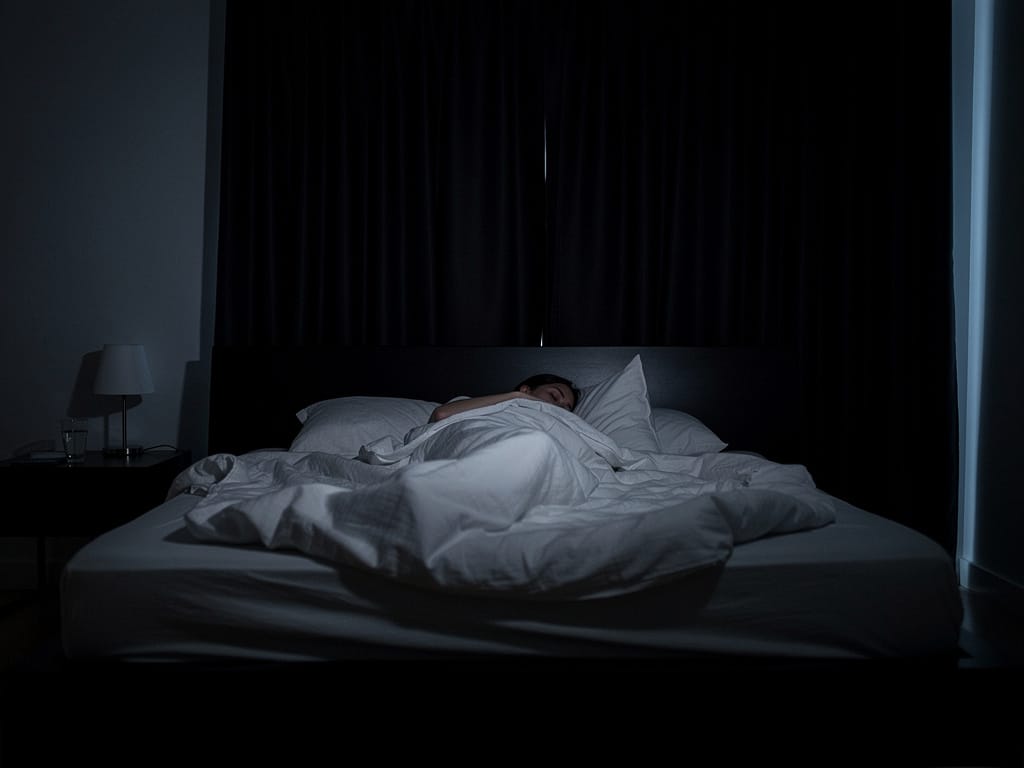
- Even streetlight seeping through curtains can be enough to fragment sleep cycles without you ever fully waking up
The body does not need to be consciously aware of light for the damage to occur. Your intrinsically photosensitive retinal ganglion cells - a specialized set of light-detecting cells in your eyes - stay active even when your eyes are closed.
What Happens to Skin and Cellular Health
Let's get specific about the aging piece.
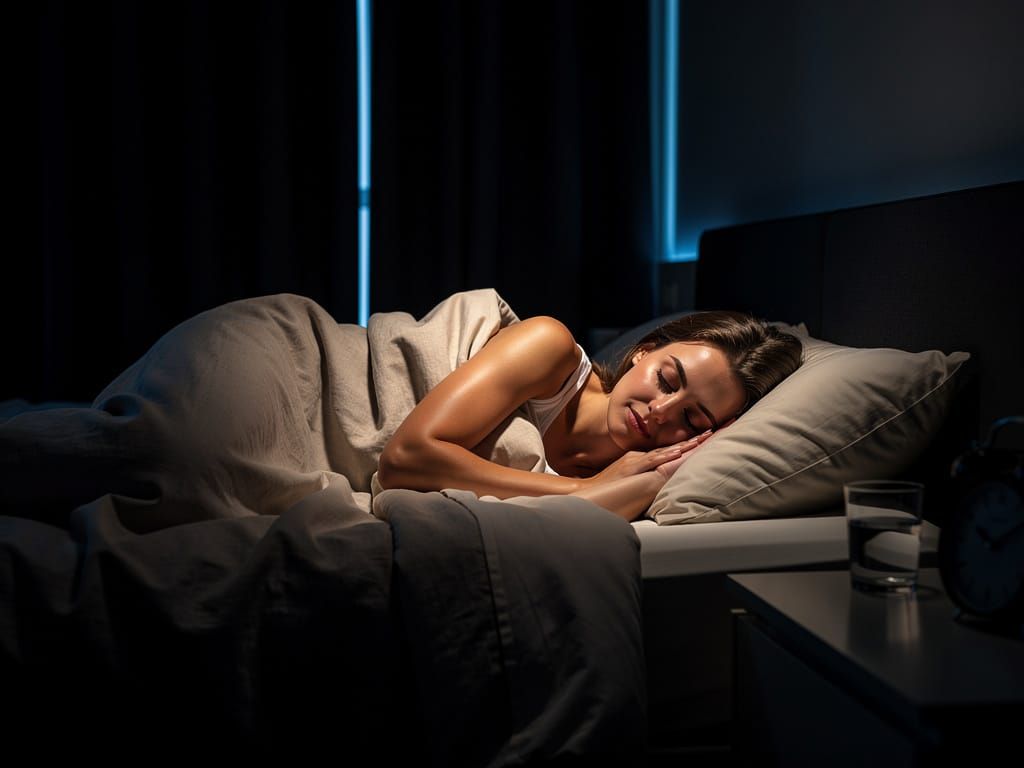
During deep sleep stages - particularly slow-wave and REM sleep - your body runs its most intensive repair programs. Skin cells regenerate. Collagen synthesis ramps up. Immune surveillance strengthens.
- Poor sleep quality accelerates skin aging - research from University Hospitals Case Medical Center showed that poor sleepers had significantly more signs of skin aging and slower skin recovery from UV exposure
- Cortisol spikes from disrupted sleep break down collagen and elastin over time - the structural proteins that keep skin firm
- Reduced melatonin output means less antioxidant protection for skin cells during the night's repair window
- Impaired cellular autophagy - the process by which cells clean out damaged components - is directly linked to light-disrupted sleep cycles
Think of total darkness as giving your biology the conditions it was literally designed to operate in. For hundreds of thousands of years, humans slept under near-complete darkness. The modern bedroom is a relatively recent - and biologically foreign - experiment.
How to Actually Create a Dark Sleep Environment
Here is the practical breakdown. No expensive gadgets required.
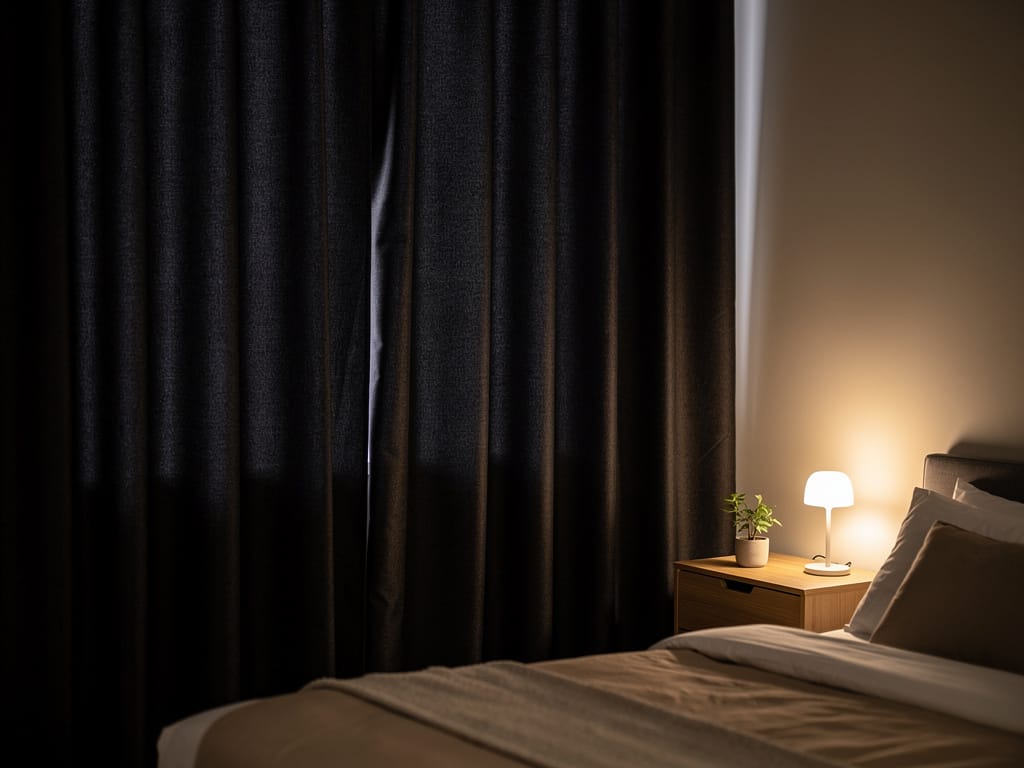
- Blackout curtains - the single highest-impact change you can make. Look for curtains rated for full light blockage, not just room darkening
- Cover all LED indicators - charging cables, smoke detectors, cable boxes, and power strips all emit light. Use black electrical tape on any indicator lights
- Ditch the phone on the nightstand - even face-down, notification flashes can penetrate and disrupt sleep stages
- Use a sleep mask - a high-quality contoured sleep mask is a fast, affordable solution when room modifications are not possible
- Switch to red or amber nightlights for any bathroom trips - these wavelengths have minimal impact on melatonin suppression compared to white or blue light
- Start dimming lights 60-90 minutes before bed - this primes your melatonin ramp-up before you even hit the pillow
One Small Shift With Long-Term Payoff
Most anti-aging strategies demand consistency over years to show results. Total darkness sleep is different - many people report noticeably deeper, more restorative sleep within the first few nights of making the switch.
The long game, though, is where the real value lives.
- Better melatonin output means stronger antioxidant defense every single night
- Improved sleep architecture means more time in the deep stages where cellular repair actually happens
- Lower chronic inflammation over years translates to slower biological aging across virtually every system in the body
This is not a biohack. It is a return to the conditions your biology has always needed.
Pull the curtains. Cover the lights. Let the dark do its work.